Troubleshooting · 7 min read
Why is my cake raw in the middle?
Brown on the outside, wet in the centre. It is nearly always heat in the wrong place, and there are four ways to fix it, including one that rescues the cake you are holding.
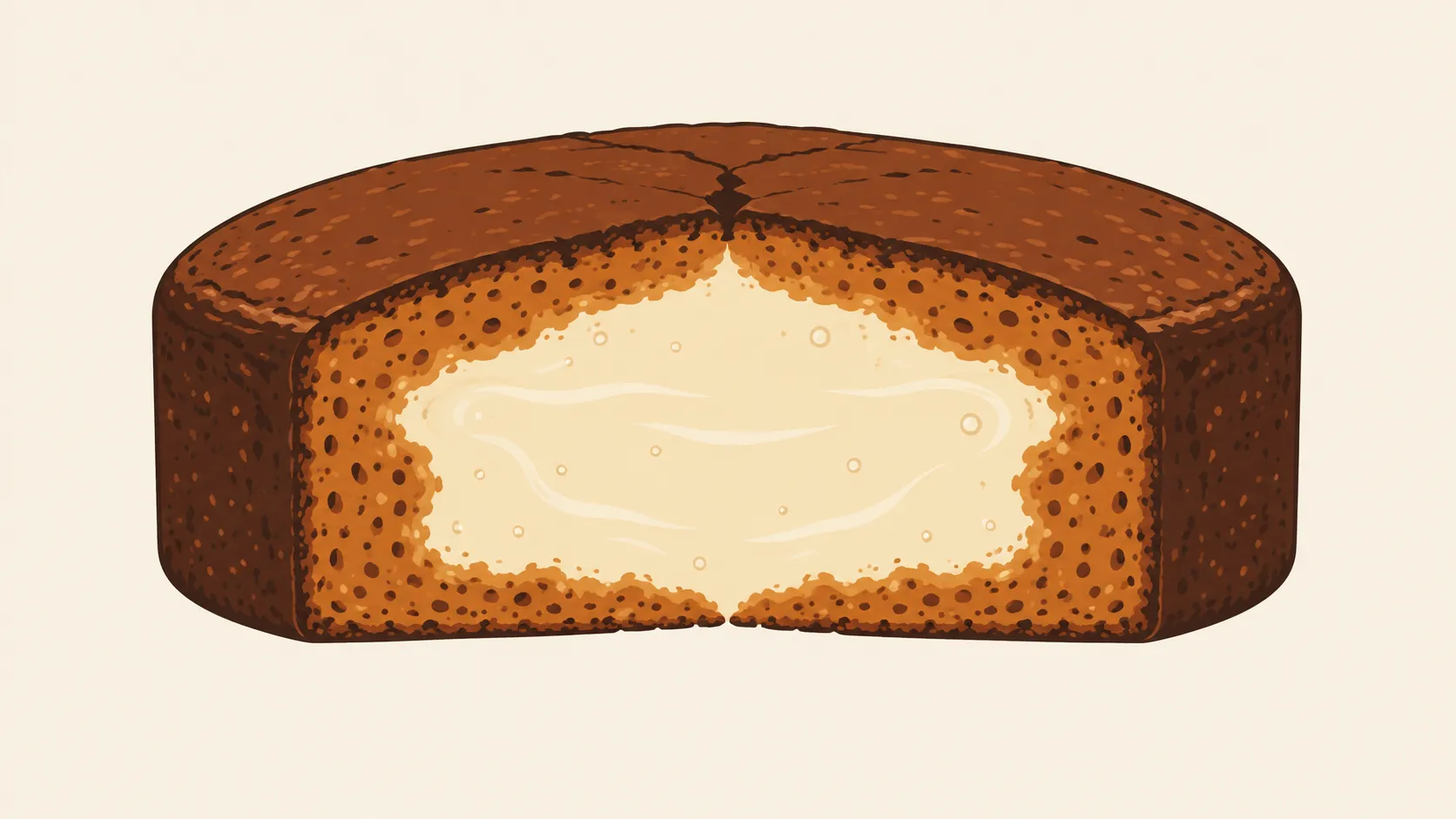
You made the cake, the top is deep golden, the skewer went in near the edge and came out clean, and twenty minutes later you cut it and the middle is wet batter. This is a different fault from a cake that sinks, and it has a different cause, so the fixes for sinking will not help you here.
The mechanism is simple. Heat travels into a cake from the outside in, and it travels slowly, because cake is mostly air and water and both are poor conductors. The surface reaches oven temperature within minutes. The centre has to wait for that heat to creep through several centimetres of insulating crumb, and while it is waiting, the water in it is boiling and holding the temperature at around 100°C no matter how hot the oven gets.
So the centre cannot cook faster than the water in it can evaporate, and the outside carries on browning the whole time. If the oven is too hot, or the cake is too deep, or it came out too early, the outside finishes long before the inside starts.
Work out which one it is
Dark outside, raw centre, and the cake is a normal height. The oven was too hot. This is by far the most common version.
Pale all over, wet centre, and it took longer than the recipe said. The oven was too cool, or too crowded, or the door was opened repeatedly.
Good colour, and only the very middle is wet, over a small area. It was close, and came out five to ten minutes early. Nothing is wrong with your oven.
Raw in a patch, not a circle, usually near one wall. Uneven heat. The tin was too close to an element.
Raw underneath the fruit rather than in the geometric centre. That is wet fruit holding the temperature down locally, and it is really the sinking-cake problem in a different costume.
The four causes
1. The oven is hotter than the dial says
Most domestic ovens are out by 10 to 20°C, and the cheap ones swing by 25°C either side as the thermostat cycles. At 200°C when you asked for 175°C, the crust sets and browns in the first fifteen minutes and then acts as a shield: it insulates the middle from the heat while continuing to darken itself.
The giveaway is the colour-to-doneness mismatch. A cake that is genuinely done and a cake that is merely brown look the same from above, which is why colour is a bad doneness test on its own.
The fix: an oven thermometer, and then trust it over the dial. If it reads high, drop the setting until the thermometer reads what the recipe asked for. On a fan oven, remember the recipe’s fan figure is already 20°C below the conventional one, so do not subtract twice.
2. The cake is too deep for the temperature
Depth matters more than width. A 20 cm tin holding a recipe meant for a 23 cm tin gives you a cake two or three centimetres taller, and heat has to travel that much further to reach the middle. The same batter in a wider tin would bake through in the stated time.
This is also why loaf tins are the worst offenders. A 900 g loaf is narrow and deep, and the same recipe that works in 45 minutes in a round tin can want 65 minutes as a loaf.
The fix: when a cake is deeper than the recipe intended, drop the oven by 10°C and add 10 to 20 minutes. Lower and slower gives the heat time to reach the centre before the outside is finished. The tin conversion table has the arithmetic for going the other way.
3. You tested in the wrong place, or too early
A skewer pushed in two centimetres from the edge will come out clean on a cake whose centre is still liquid, because the edge cooks first. And a skewer that passes through a pocket of jam, melted chocolate or soft fruit comes out wet on a cake that is perfectly done.
The fix: test in the geometric centre, all the way to the base of the tin, and then test a second spot a few centimetres away. Two clean readings, or two readings with a few damp crumbs on a fudgy cake, mean done. One reading means nothing.
The better test: press the top gently with a fingertip. A finished cake springs back and feels set. An unfinished one wobbles, and you can feel liquid moving under the crust.
4. The oven was crowded or the door kept opening
Two tins side by side block the airflow that carries heat around a fan oven, and each one shields the other. Every door opening costs 20 to 30°C that then has to be recovered before the cake makes any more progress.
The fix: bake one tin at a time in the middle of the middle shelf, with space around it. If you must bake two, put them on the same shelf with a gap rather than stacking shelves, and add 10 minutes.
How to rescue a cake that is already raw
This is the useful part, and it is more often possible than people think. The two situations are quite different.
If it is still in the tin and you have only just noticed, put it straight back into the oven, drop the temperature to 160°C conventional, and cover the top loosely with foil. The foil stops further browning while the heat keeps moving inwards. Give it 10 to 15 minutes and test again. This works well. The only cost is a slightly drier edge.
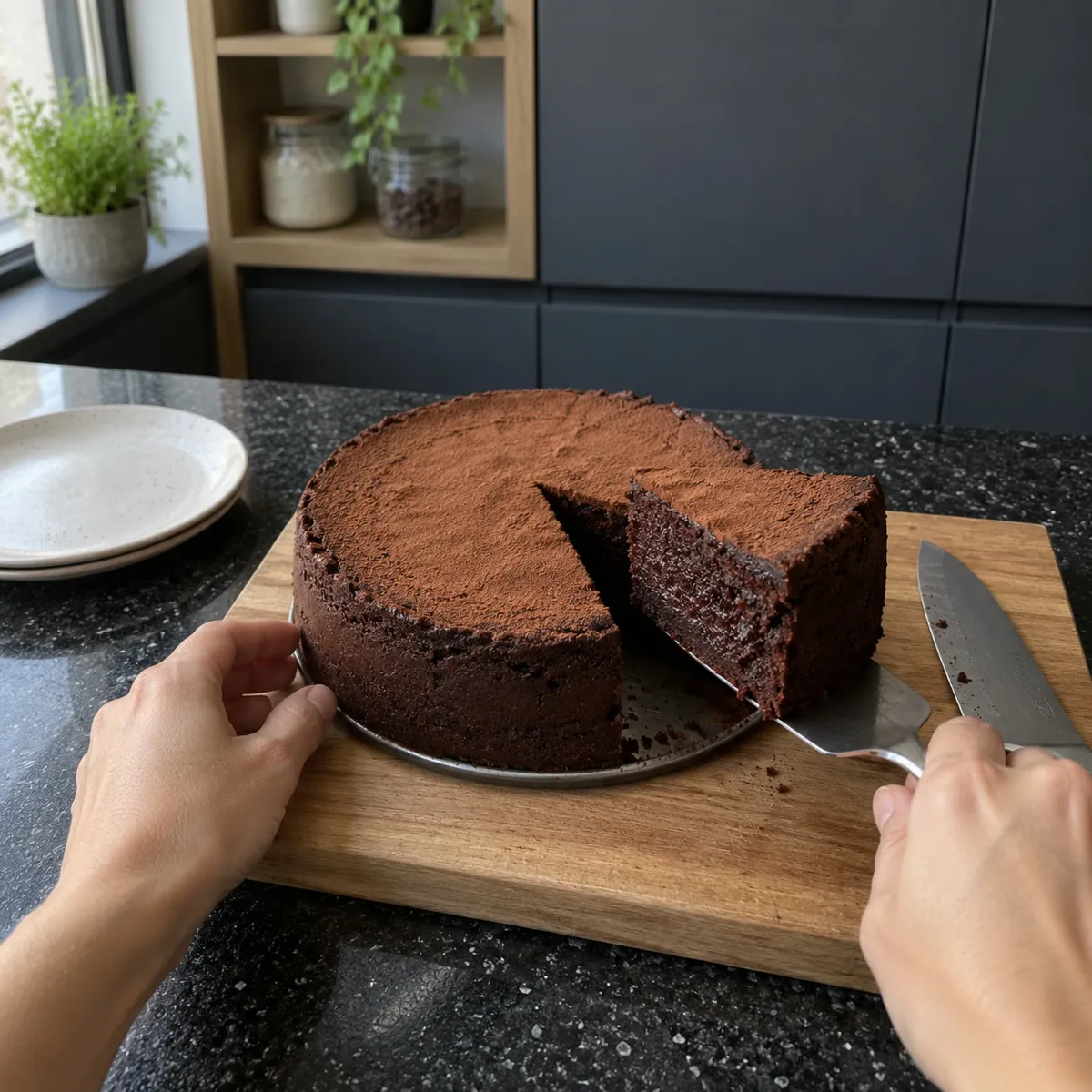
If it has already cooled, and the raw part is a small area in the centre, you can still rescue it, but not by reheating the whole cake, which will simply dry the cooked parts. Cut the raw centre out cleanly, and serve the cooked ring as slices. It is not a defeat: a ring cake with the middle filled with cream and fruit is a legitimate thing to put on a table.
If it has cooled and most of the inside is wet, stop. Reheating it now will produce a dry outside and a still-damp middle, because the crumb has set and the structure will not cook evenly a second time. Use it as the base of a trifle, where wet crumb is an advantage, or make cake truffles by mixing the cooked parts with a little cream cheese and rolling them.
What never works: the microwave. It cooks the centre from the inside out, which sounds ideal, but it does it so fast that the water turns to steam and the crumb goes tough and rubbery in under a minute. You will be able to taste the difference immediately.
Getting it right next time
Put the changes in this order, because the first one makes the other three easier to judge:
- Buy an oven thermometer and calibrate the dial against it once.
- Bake one cake at a time, centre of the middle shelf, nothing touching a wall.
- Test in the centre, twice, to the base of the tin, and use springback as well as the skewer.
- If the cake is deeper than the recipe intended, drop 10°C and add 10 to 20 minutes.
And if the cake is browning too fast before the middle is anywhere near ready, lay a loose sheet of foil over the top at the halfway mark. That single move solves the majority of these. It costs nothing, it cannot hurt the cake, and every recipe on this site that browns quickly says to do it.
If your problem is the opposite one, where the cake cooked through but collapsed as it cooled, the causes are completely different and they are set out in why cakes sink in the middle.