Troubleshooting · 9 min read
Why did my cake sink in the middle?
Seven causes, one of which is almost certainly yours. Read the crater, find the fault, and know how to stop it happening again.
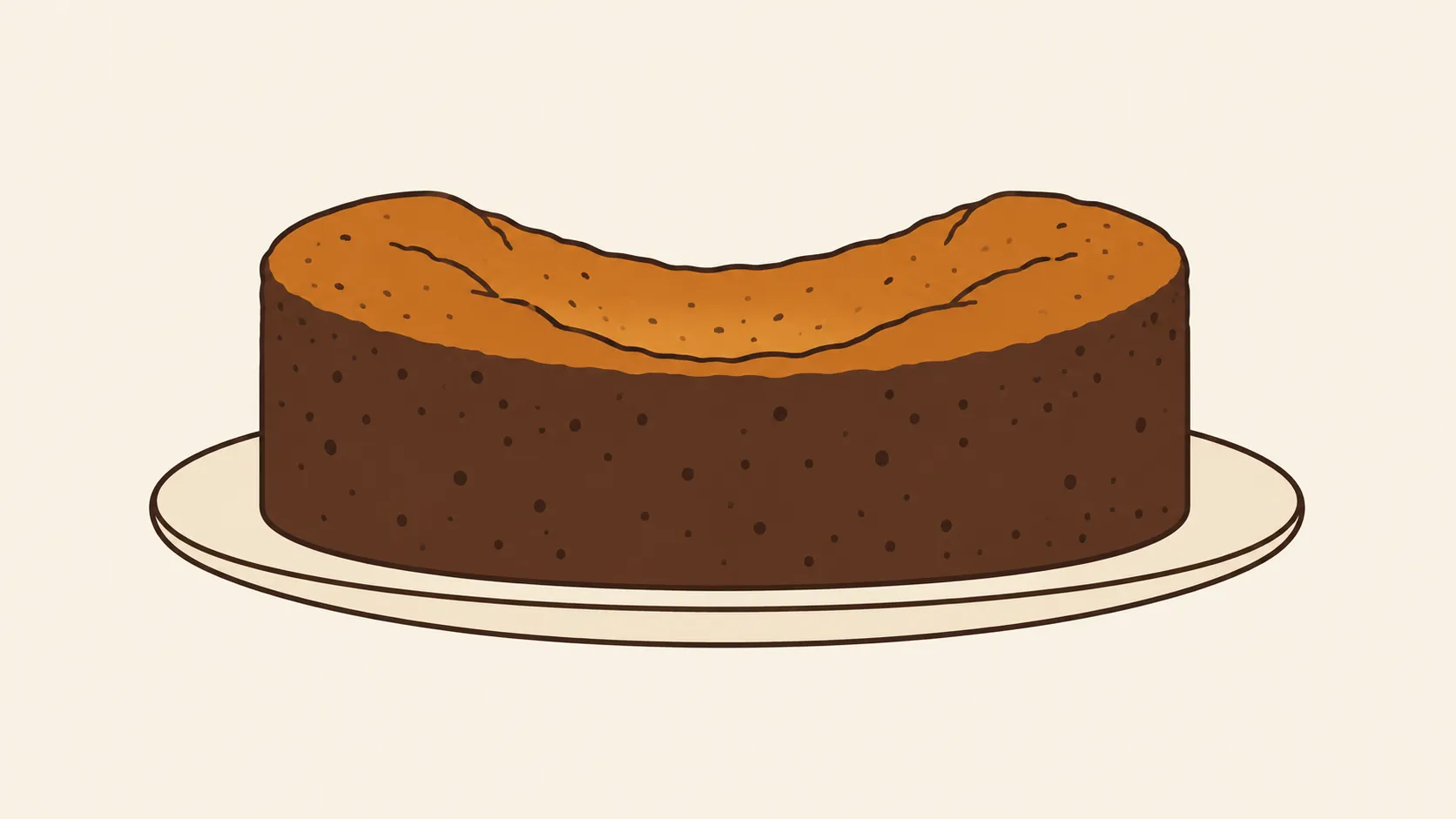
A sunken cake is not a failure of skill. It is a structural collapse, and like any collapse it leaves evidence behind. The shape of the dip, the texture of the crumb underneath it, the colour of the edges and the moment it fell all point at a specific cause, and each cause has a different fix.
It helps to know what is actually holding a cake up while it bakes. For the first two-thirds of its time in the oven a cake is a foam: thousands of gas bubbles, blown up by carbon dioxide from the raising agent and by steam from the liquid, held in a wet batter that has not set yet. Nothing is rigid. The only thing keeping that foam from flattening is the pressure of the gas inside it.
Somewhere around two-thirds of the way through, the egg proteins coagulate and the starch in the flour gelatinises. That is the moment the foam turns into a sponge, a solid structure that holds its own shape. Everything that goes wrong with a sinking cake goes wrong in the window before that moment, and almost always for one of two underlying reasons: the gas pressure dropped, or the structure was never strong enough to take over when it arrived.
Read the crater first
Before changing anything, look at what you have. The shape of the collapse narrows it down immediately.
A wide, shallow dip with a wet, dense seam underneath it means the structure never set. The cake rose, the egg and flour did not coagulate fast enough to hold the foam, and gravity won as it cooled. Look at causes 1, 5 and 6.
A deep, sharp crater with a cracked, over-risen rim means it rose too far, too fast, and then fell. The edges may look almost overdone while the middle is pale. Look at causes 2 and 3.
A dip on one side only is uneven heat rather than a recipe problem. The oven has a hot spot, or the tin sat too close to a wall or an element. Look at cause 3.
A cake that was perfect in the oven and sank on the counter fell during cooling, not during baking. That is cause 7, and it is the one most often misdiagnosed as under-baking.
A band of sunken fruit at the bottom with a fine crumb above it is not really a sinking cake at all. That is cause 6, and the cake itself is fine.
The seven causes
1. You opened the door too early
This is the classic, and it is real physics rather than superstition. Opening the oven door drops the cavity temperature by 20 to 30°C in a few seconds. Inside the cake, the steam that was holding the bubbles open condenses back into water almost instantly, the gas contracts, and the foam has nothing propping it up. If the structure has not set yet, it falls, and it cannot come back.
The rule: no door at all for the first 25 minutes of any cake baked for 40 minutes or more. After that, open it briskly, do what you came to do, and close it briskly. One long, thoughtful look costs more heat than three quick ones.
If you must check early, use the oven light and look through the glass. That costs nothing.
2. Too much raising agent
More baking powder does not mean more lift. It means faster lift, and faster lift is the enemy. The bubbles grow larger than the batter’s protein structure can contain, neighbouring bubbles merge into big ones, the big ones rise to the surface and burst, and the gas that should have been holding the cake up leaves it entirely. The cake climbs dramatically in the first fifteen minutes and then sinks, usually with a coarse, slightly tunnelled crumb.
The rule: one to one and a half teaspoons of baking powder per 150 g of flour. That is the whole rule. If you are also using an acidic liquid such as buttermilk, yoghurt or soured cream, part of that becomes bicarbonate of soda instead, roughly a quarter teaspoon per 240 ml of acid, and the baking powder comes down to match.
Worth checking: baking powder loses strength within about six months of opening. Drop half a teaspoon into hot water. If it does not fizz enthusiastically it is dead, and the answer is a new tin rather than a bigger spoonful.
3. Your oven is lying to you
Domestic ovens routinely run 10 to 20°C away from the number on the dial, and the swing between the thermostat cutting in and cutting out can be 25°C in a cheap one. Both directions cause sinking, by opposite routes.
Too hot sets the crust early while the middle is still liquid foam. The outside becomes a rigid shell, the inside keeps expanding against it, and when you take the cake out the unsupported centre drops away from the set edges. That is the deep crater with dark edges.
Too cool never gets the structure to set before the raising agent has finished its work. The cake rises gently, runs out of gas, and subsides.
The rule: buy an oven thermometer. It costs less than the ingredients for three cakes and it is the highest-value object in a home kitchen. Then bake in the middle of the middle shelf, not touching a wall, and if your oven has a known hot corner, turn the cake once after the structure has set, which is the point where the top no longer wobbles when you nudge the shelf.
4. The batter was over-mixed
Beating flour into a batter develops gluten. A little is essential: it is the net that holds the bubbles in place. Too much turns that net into elastic. The cake climbs enthusiastically in the oven because the elastic stretches, then contracts back down as it cools, leaving a dip in the middle and a crumb that is tight and faintly rubbery rather than tender.
The rule: cream the butter and sugar for as long as you like, because that stage is only fat and air. Once flour is in the bowl, fold until it disappears and then stop. Streaks of dry flour are a problem. Ten extra strokes to be safe are a bigger one.
The tell: an over-mixed cake is dense and slightly chewy. If the dip came with a tender, open crumb, over-mixing is not your fault.
5. Too much liquid or sugar for the flour
Sugar and liquid are both structural weakeners. Sugar raises the temperature at which egg proteins set, which delays the moment the foam turns solid. Liquid does the same by diluting everything. A batter carrying too much of either can simply run out of time: the raising agent finishes, the structure has still not set, and the whole thing subsides.
This is what usually happens when somebody doubles the milk to make a cake “more moist”, or adds an extra egg for richness without adjusting anything else.
The rule: for a 20 cm tin, stay near 250 g flour, 200 g sugar, 200 g fat, three to four eggs and 100 to 150 ml of liquid, and change one thing at a time. If you add cocoa, add liquid to match, because cocoa is thirsty: roughly 15 ml of extra liquid per 10 g of cocoa. If you add ground nuts, replace no more than a third of the flour, because ground nuts bring fat but no gluten.
6. Wet fruit went in without a coat
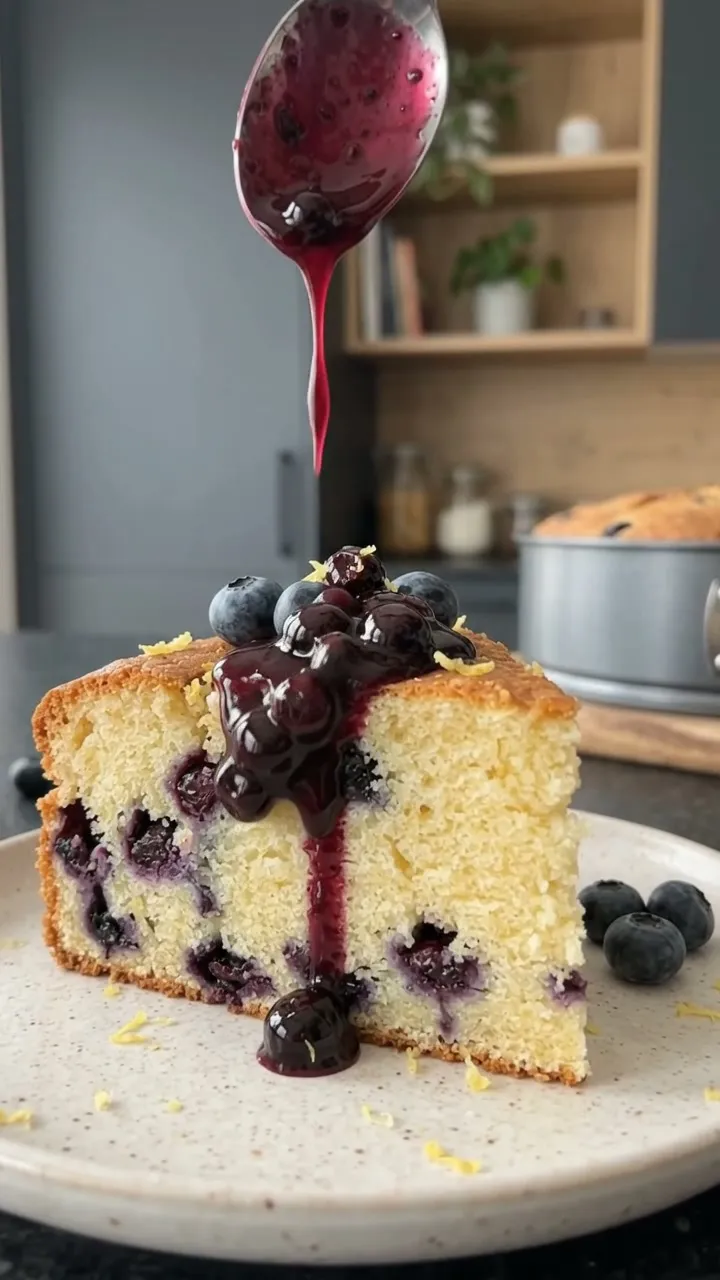
Berries, diced apple, grated carrot and drained tinned fruit all release water as they heat. That water makes the batter around each piece locally wetter and heavier than the batter elsewhere, and the fruit sinks through the unset foam, dragging a dense seam down with it. What you get is a band of fruit at the bottom, a dip above it, and a perfectly good cake in between.
The rule: toss the fruit in a tablespoon of the recipe’s own flour until it looks dusty, then fold it in with three or four strokes at the very end. The flour coat gives the fruit something to grip. Keep frozen fruit frozen, because thawed berries bleed into the batter and weigh more. And make the batter deliberately thicker than feels right, thick enough to hold its shape briefly on the spoon.
Do not wring out grated carrot. That moisture is what keeps a carrot cake damp for four days. Distribute it instead, by using the coarse side of the grater rather than the fine one.
7. It came out of the tin too early
A cake carries on setting as it cools. Straight out of the oven the crumb is still soft, the starch is still firming, and the structure is being held together partly by the tin. Unclip the ring at five minutes, while the centre is still steaming, and the sides splay outwards and the middle drops.
The rule: twenty minutes in the tin, every time. Then run a thin knife around the edge, unclip the ring, and leave the cake on the tin base until it is cool enough to hold in your hand. Only then move it.
The related mistake: cooling it in a draught. A cake cooling next to an open window contracts unevenly and cracks or dips. Put it somewhere still.
How to stop it happening again
If you change one thing, change the oven thermometer. Guessing at the real temperature makes every other variable impossible to reason about, because you never learn whether the fault was the recipe or the box it baked in.
After that, the order that fixes the most cakes for the least effort:
- Measure the raising agent instead of eyeballing it, and check it still fizzes.
- Leave the door shut for the first 25 minutes.
- Stop folding the moment the flour disappears.
- Flour the fruit.
- Give it the full twenty minutes in the tin.
That is most of it. Cakes are more forgiving than their reputation suggests, and almost every sunken one comes from a single identifiable decision rather than from bad luck.
What to do with a cake that has already sunk
Nothing will re-inflate it. The gas is gone and the structure has set around the collapse, so cutting it, propping it or returning it to the oven will not help, and more heat will only dry it out.
But a sunken centre is a bowl, and bowls hold things. Fill it with whipped cream and fruit and call it a pudding. Cut squares from the outside in and serve the good parts. Layer the broken pieces into glasses with cream and fruit as a trifle.
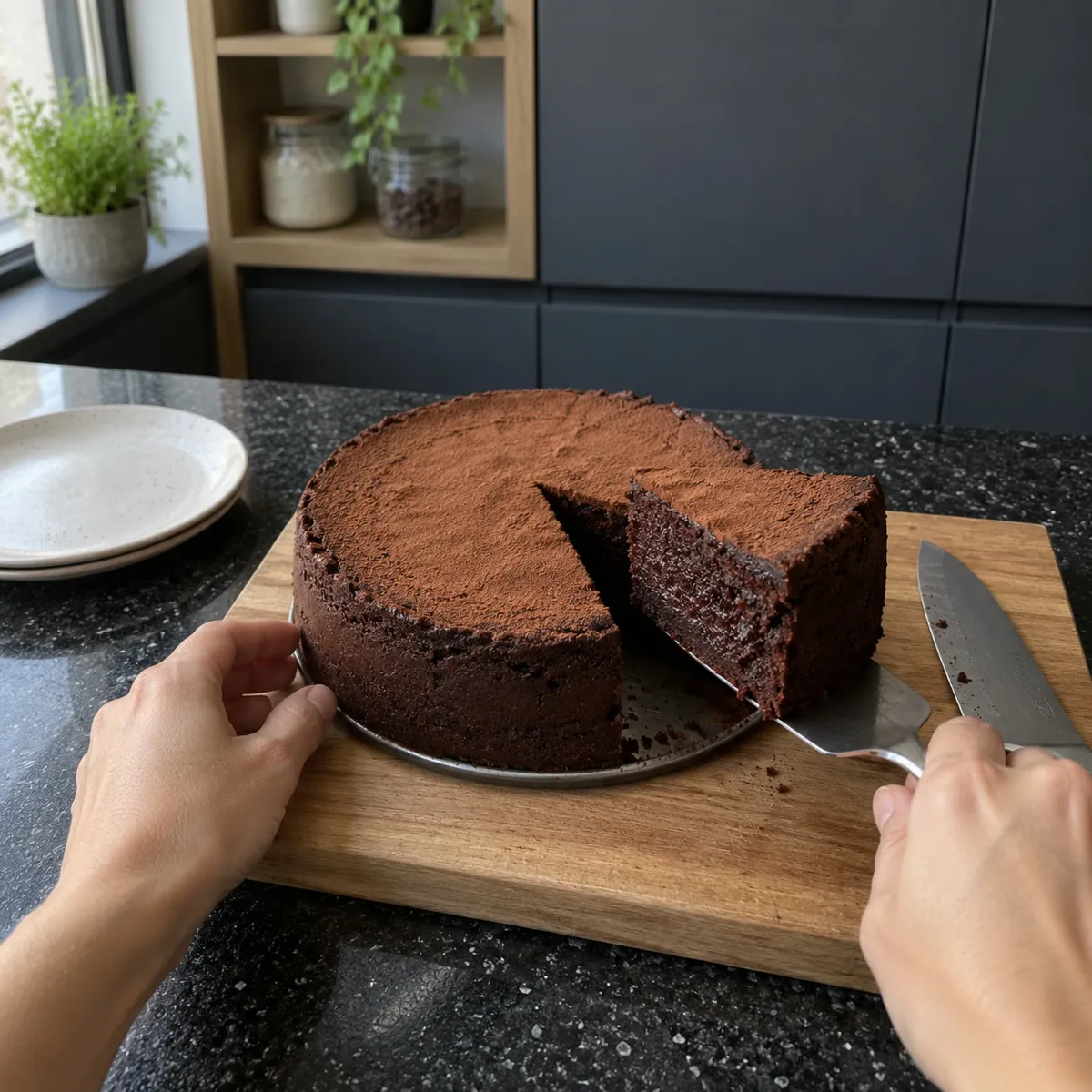
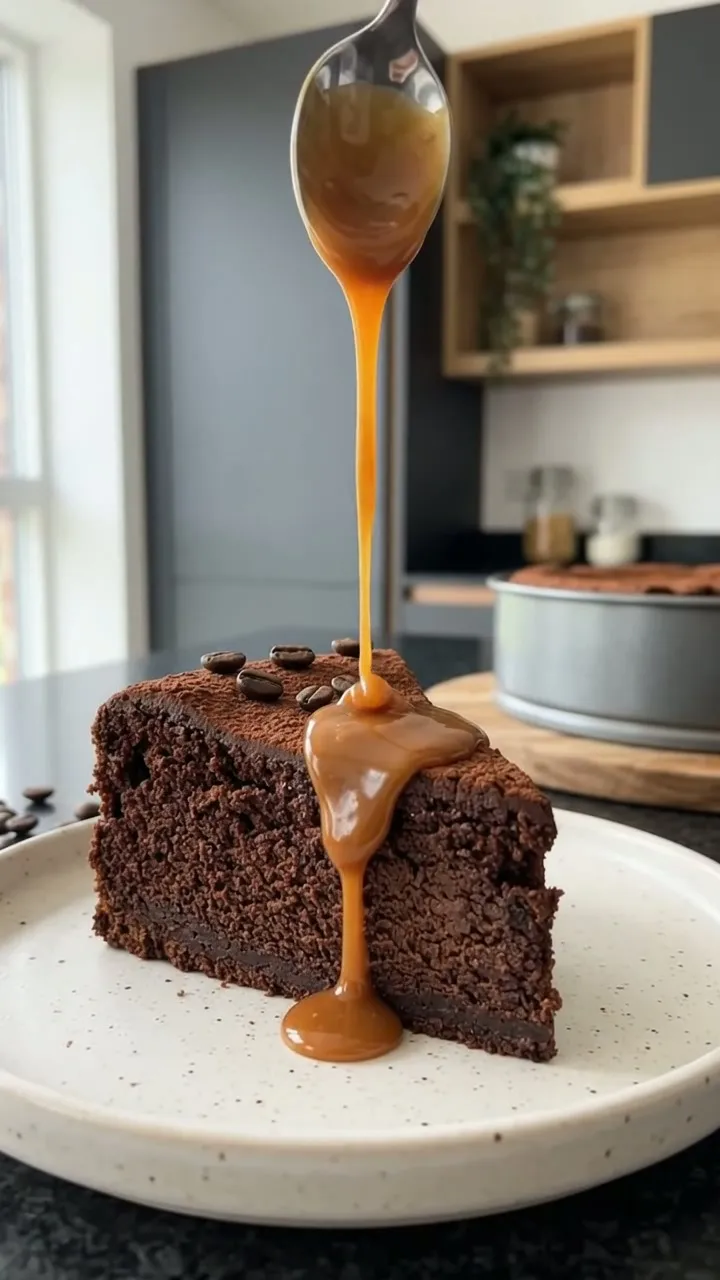
Or do what this site does with every cake anyway, and pour a warm sauce over each slice. A dip in the middle is exactly where a salted caramel wants to pool. Nobody at the table will ask, and if they do, the honest answer is that the middle is the best bit.
If it sank because it was genuinely under-baked rather than collapsed, that is a different problem with a different fix, and it is covered in why cakes come out raw in the middle.